
Dervishes, often seen as mystics shrouded in secrets, are famous for their spinning dance, a captivating ritual that intrigues as much as it fascinates. At the heart of this practice is a phenomenon that defies our usual understanding of the human body and its limits.
The dervish dance, or Sema, is much more than a performance. It is a form of meditation in movement, a profound spiritual act that seeks harmony with the universe. To the uninitiated spectator, these continuous rotations may seem an insurmountable challenge, an inevitable dizziness. Yet the dervishes spin relentlessly, showing no signs of disorientation or unease. How is this possible?
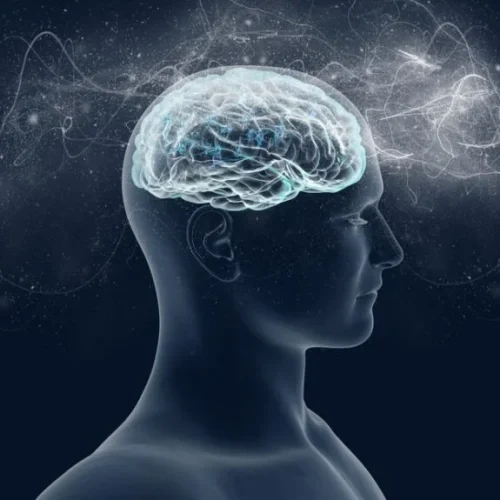
The explanation lies in the extraordinary capacity of the human brain and body to adapt. At the heart of this phenomenon are two areas of the brain: the cerebellum and the cerebral cortex. The cerebellum plays a crucial role in managing balance and movement, processing signals from the vestibular system of the inner ear. The cerebral cortex is involved in the perception of vertigo.
Through their rigorous training, dervishes modify the way these areas of the brain process signals from the inner ear. Normally, when we spin, the fluids in the inner ear continue to move, sending signals to the brain that can lead to feelings of dizziness and even vomiting. However, in dervishes, this intensive training seems to retrain the brain to interpret these signals differently.
But to reduce the practice of the dervishes to a simple physiological adaptation would be an oversimplification. For these mystics, dance is a path to transcendence, a means of achieving a deeper union with the divine. Each rotation is a further step towards inner harmony, a movement towards the perfect balance between mind and body.
The practice of dervishes invites us to reflect on the extraordinary capacities of the human body and mind. It reminds us that beyond our apparent perceptions and limitations lies an almost infinite potential for transformation and adaptation. By observing and seeking to understand these ancient traditions, we can glimpse the deeper mysteries of our own nature.
What is the Dervish Oracle?
It is a silent spiral. Each card is a step in an invisible dance where we join the rhythm of the world. The oracle is not static: it vibrates, it breathes, it allows itself to be tamed by slowness.