Sufi dance:
a moving meditation
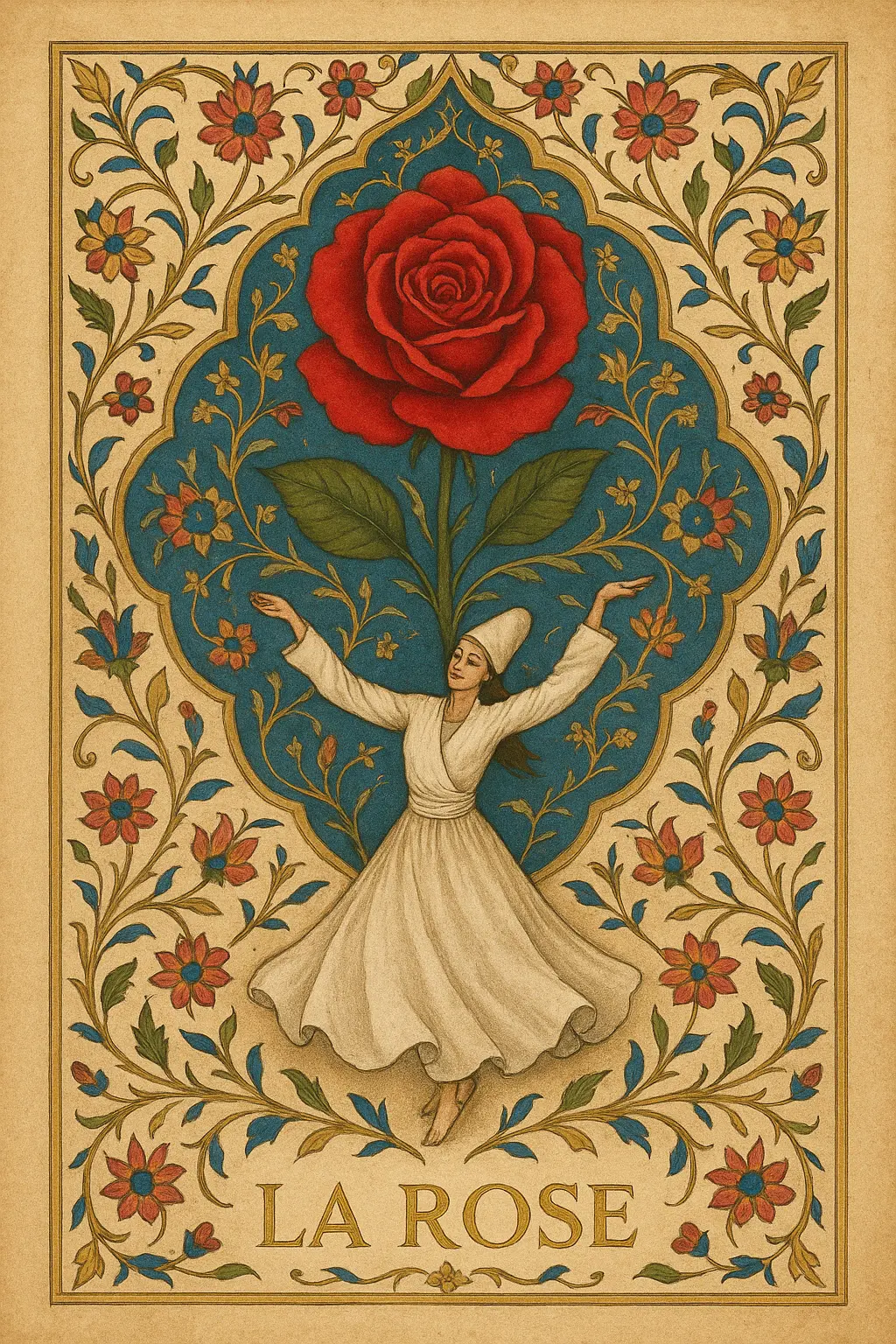
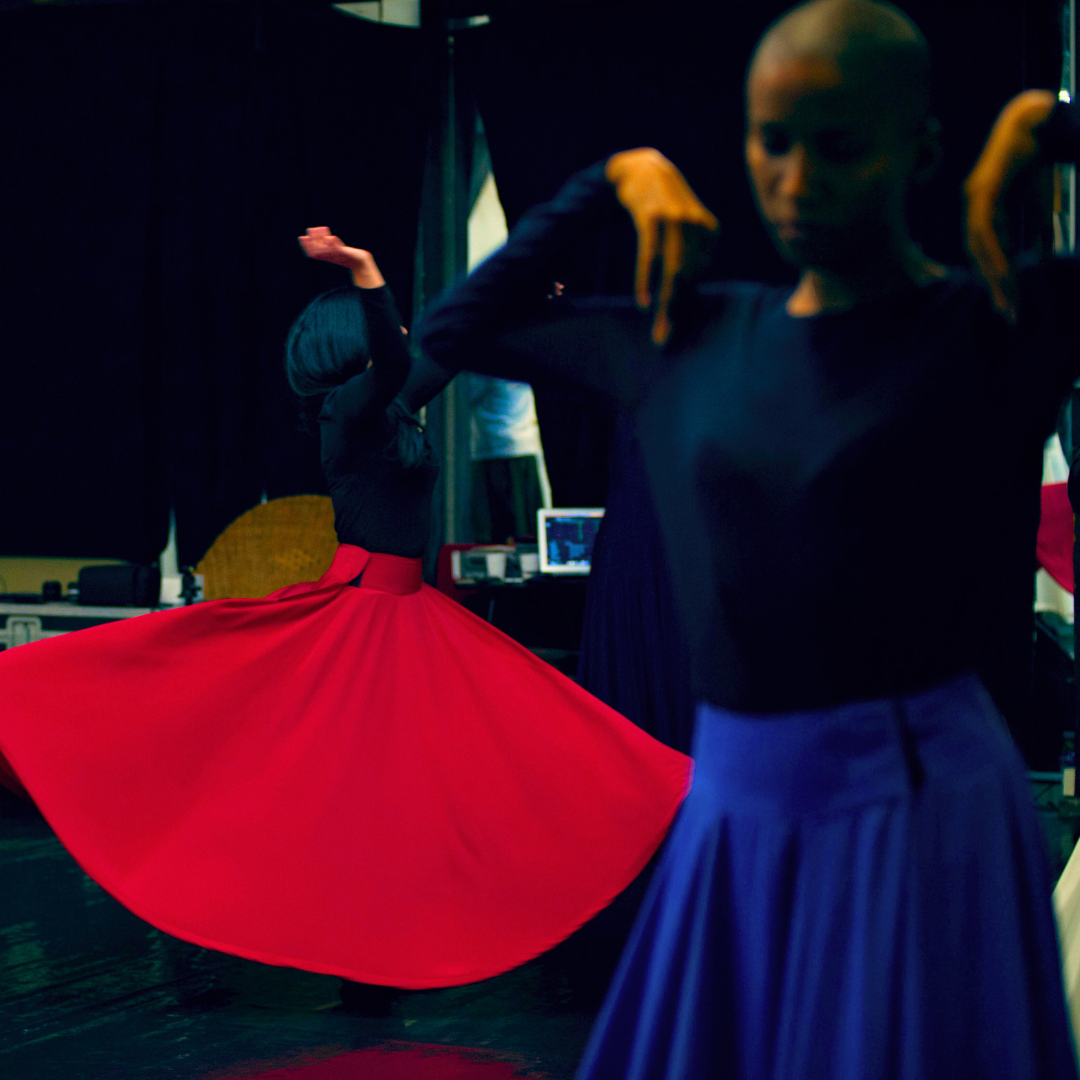
La Sufi dance is a spiritual and artistic practice originating from Sufism, the mystical dimension of Islam. For centuries, it has been part of the Samâ, a ceremony where music, poetry and rotation allow one to enter a state of deep presence.
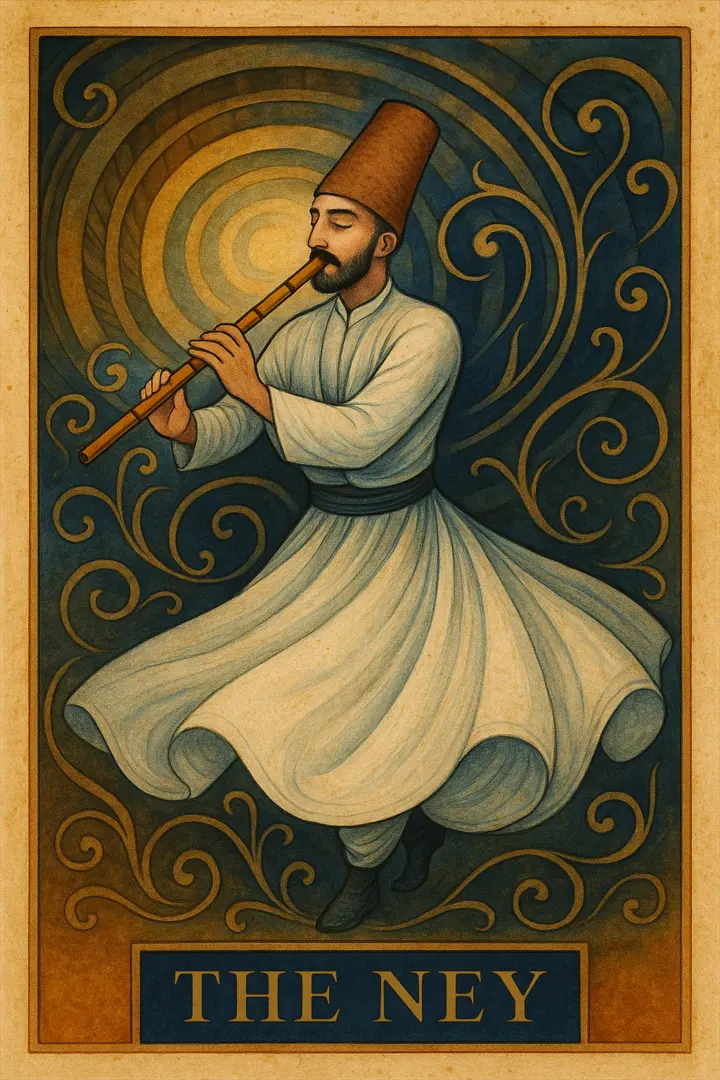
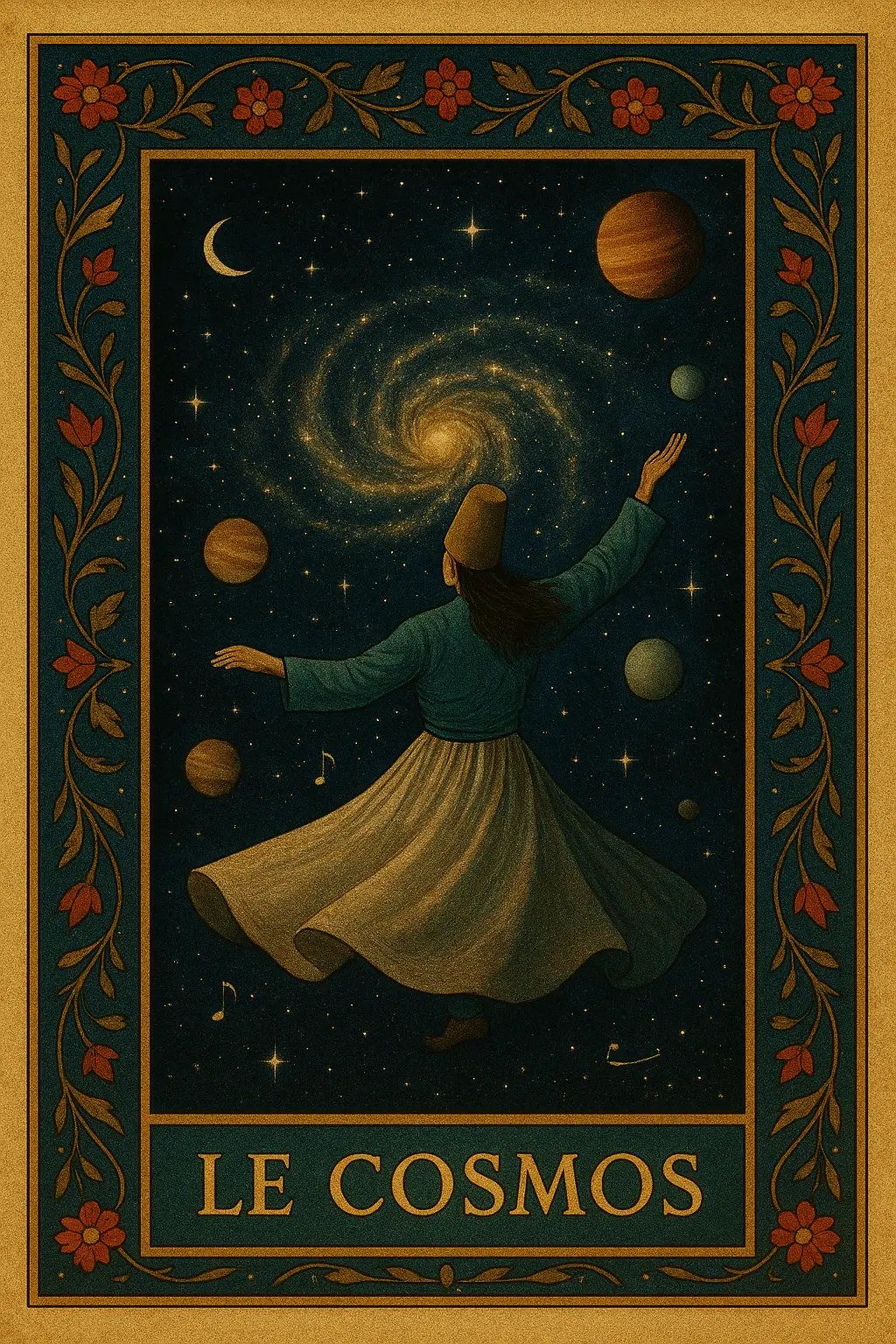
In this tradition, circular movement is not a mere choreography. It becomes a meditation in motion. As it rotates around its axis, the dervish seeks to find an inner centre, a point of calm at the heart of the movement. The rotation evokes the movement of the planets, the rhythm of nature, and the breath of life.
The practice is often known in the West today as Whirling dervish dance, the dance of the whirling dervishes. It is linked to the teachings of the great Persian mystic poet Jalāl ad-Dīn Rūmī, whose poetry celebrates love, spiritual ecstasy, and movement as pathways to self-knowledge.
Upcoming Events
International school dates
The dancer then becomes a channel, crossed by a force greater than him.
The circle he draws evokes the planets in orbit, the spirals of creation, the cycles of life and death.
In this circular movement, everything erases time, the self, and the boundaries.
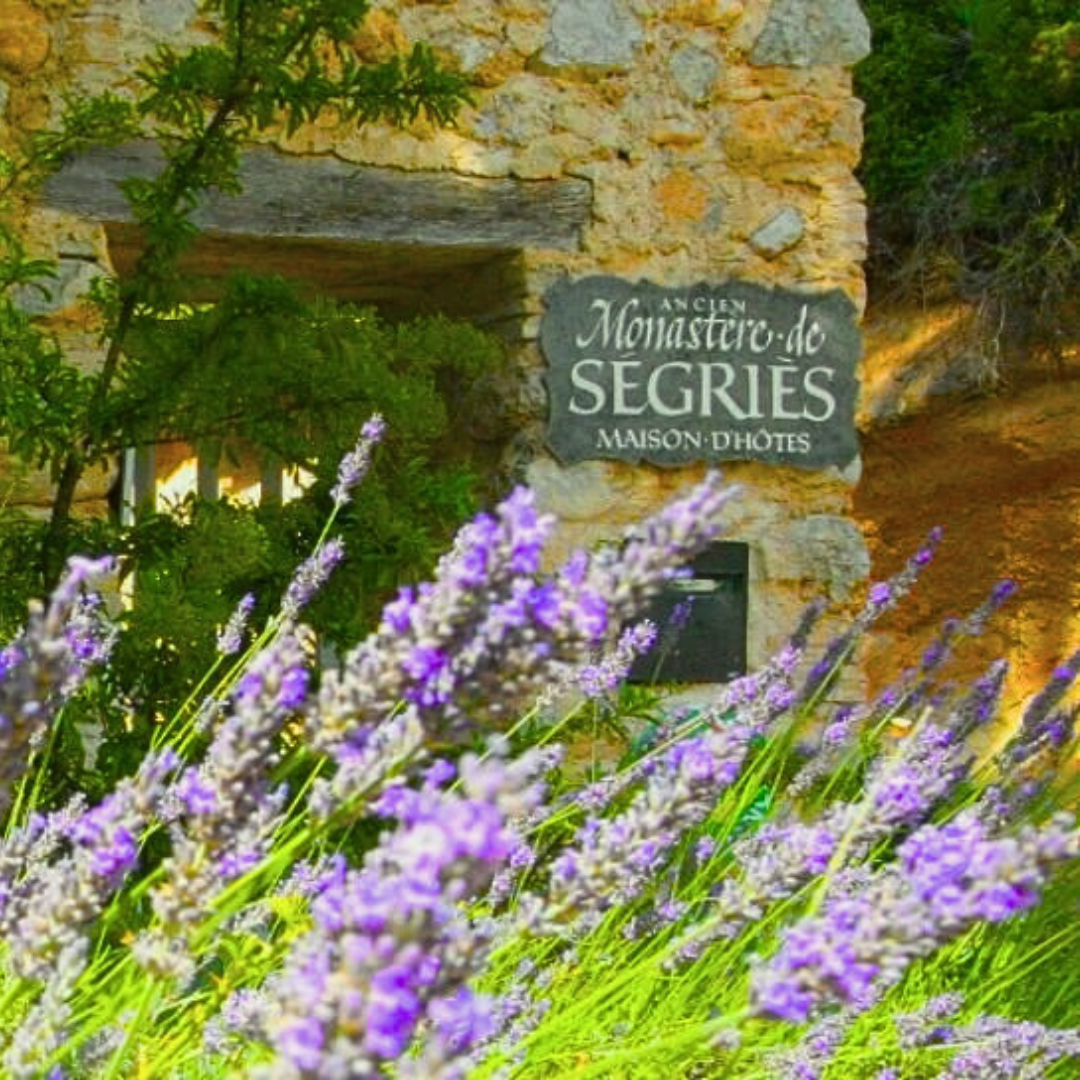
The Sufi Temple in Arles
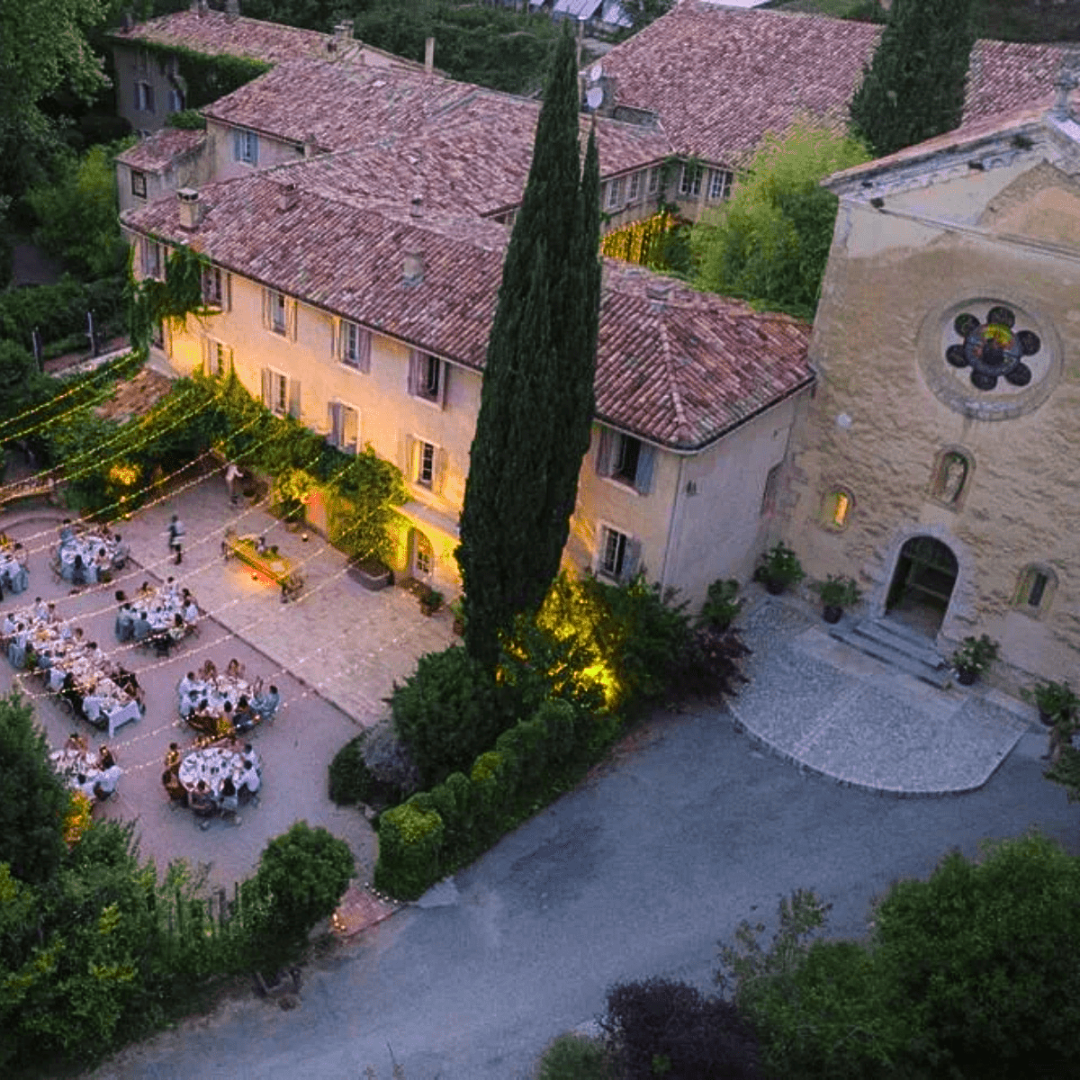
In the heart of Provence, close to the town of Arles, lies a very special place: the Sufi Temple.
This place was born out of the desire to create a space entirely devoted to Sufi dance practice, inner research and artistic transmission. Away from the rhythm of the world, the Sufi Temple offers an environment conducive to the study of movement, concentration and the experience of the circle.
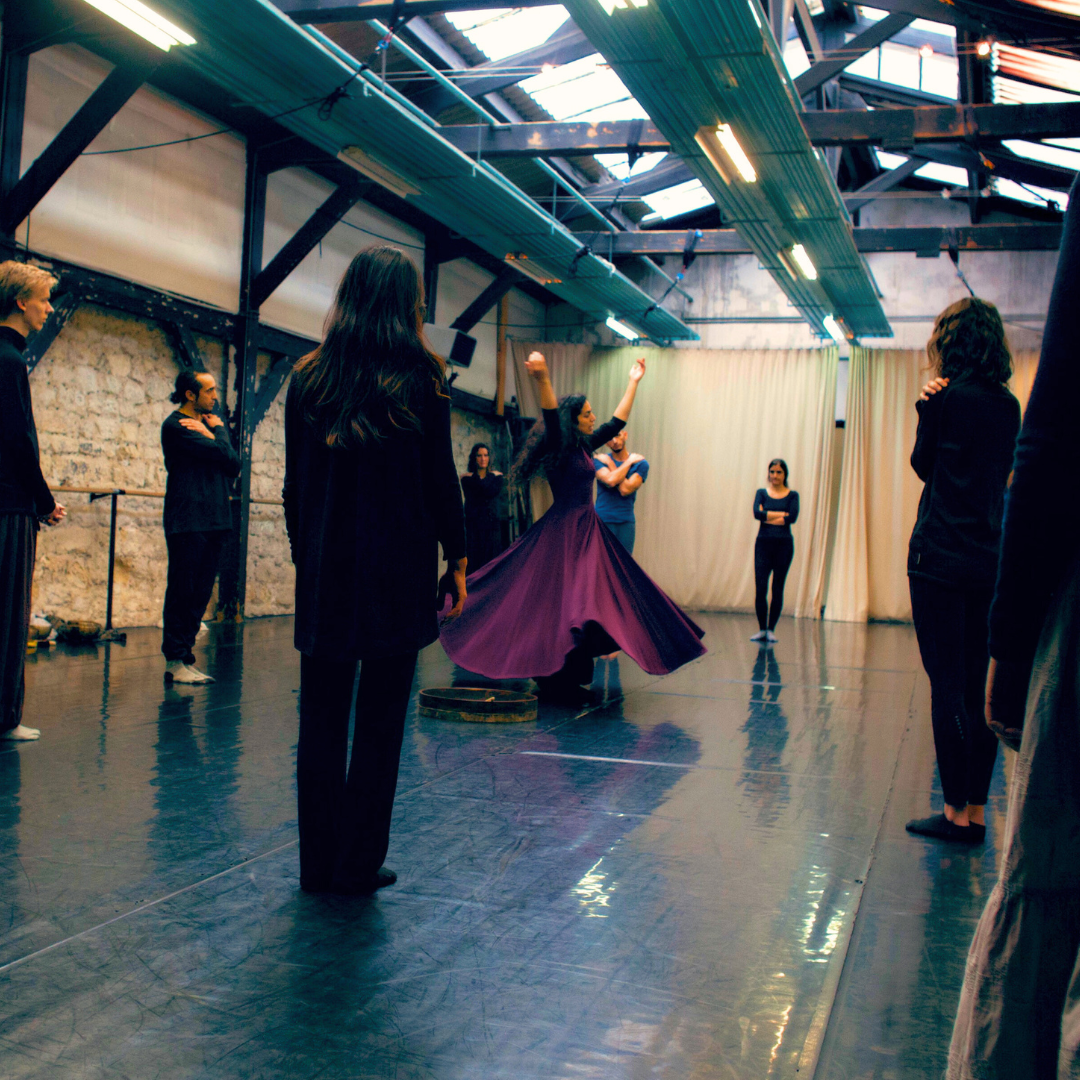
The Sufi Temple is not just a dance studio. It is a space conceived as a a place of retreat, training and creation, This is one of a series of dance classes in which the practice of spinning is part of an approach that is at once physical, artistic and meditative.
Mystic Guidance
At the heart of the spiral, the body and the soul seek the same center. Rana Gorgani accompanies you from a distance in a drawing inspired by the dervish way: a time of clarity, self-awareness and alignment, supported by Sufi poetry and the symbol of rotation.
What you will receive
December 28, 2022
Rana Gorgani, Franco-Iranian artist and choreographer, has been organizing a spiritual retreat since 2012, accompanied by an initiation into the dance of whirling dervishes.
At the end of this afternoon, in Ornaisons (Aude), the participants in the retreat whirl or play the tambourine with a joy and abandon shared by all. A broad smile lights up the face of Rana Gorgani, the organizer, as she slowly stops twirling to sit next to the lute player. "Are you crying?" she says as she sees Yosra crushing a tear of emotion. Satisfied, Rana throws: "That’s the thing!" , that is to say this "state", for some a moment of ecstasy, for others a shared fullness, during which musicians and dancers are all transported by music and dance.
June 3, 2023
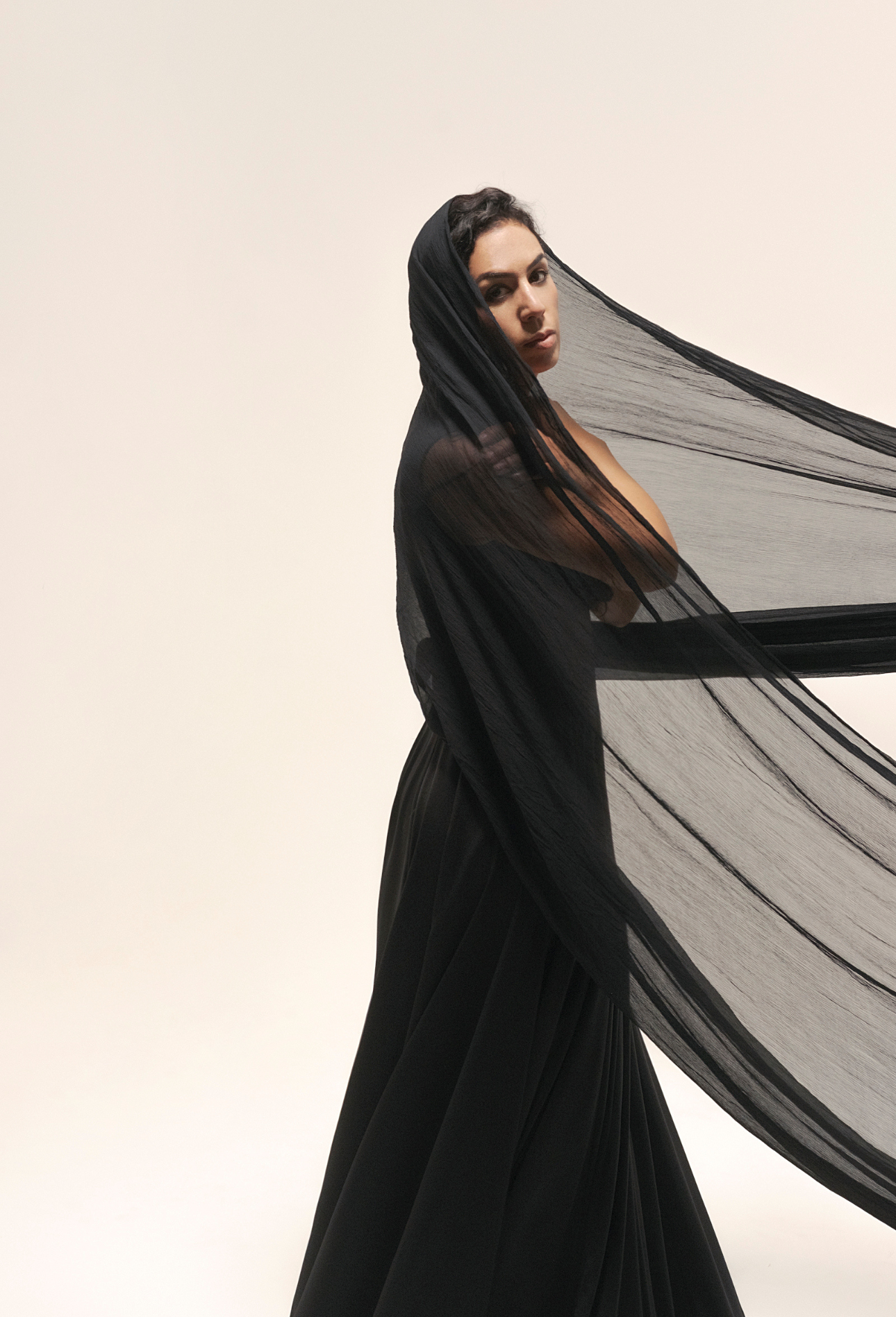
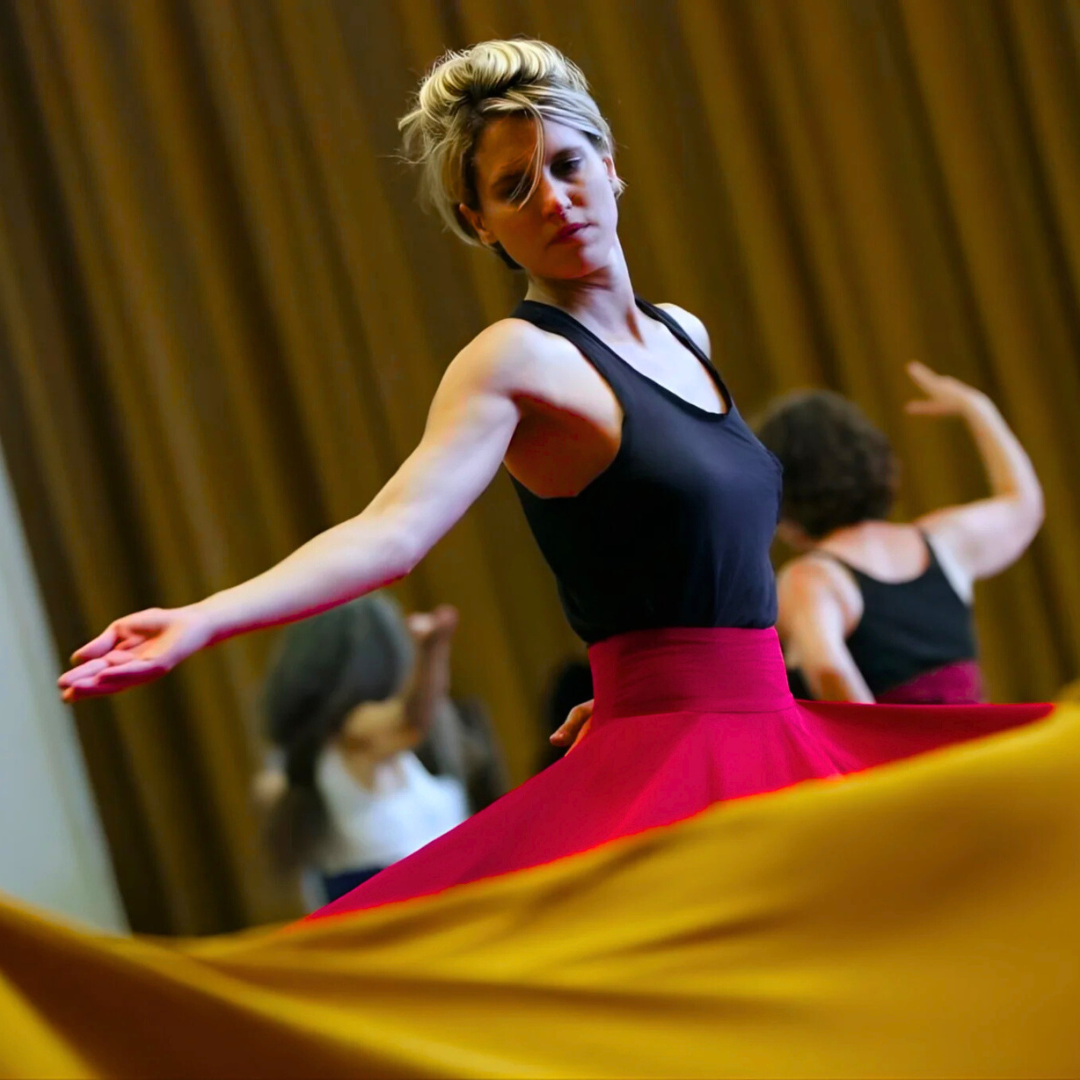
The Sufi dance is distinguished by continuous and rotary movements that lead the being into an ecstatic state. This ancestral dance is traditionally reserved for men. Being a woman and a whirling dervish has long been unthinkable. Rana Gorgani embodies a true renewal in the practice of Sufi dance. She is one of the very few female whirling dervishes in the world. His work does not stop at the universe of traditional music: Rana collaborates with many musical styles. This atypical artist transcends borders, just as she exceeds her physical limits through her total mastery of Sufi dance.

Whirling dance, or semâ, is far more than a movement. It is prayer, offering, dissolution. Rooted in the Sufi tradition, it embodies the quest for union with the Divine, the search for spiritual ecstasy through the rotating body.
The dervish does not whirl to escape the world, but to become more deeply rooted in it, in another way. Each step, each turn is a silent praise, a way of shedding the ego, of silencing the mind so that only the soul may speak. The ground becomes an axis, the heart becomes the center.
Rana Gorgani
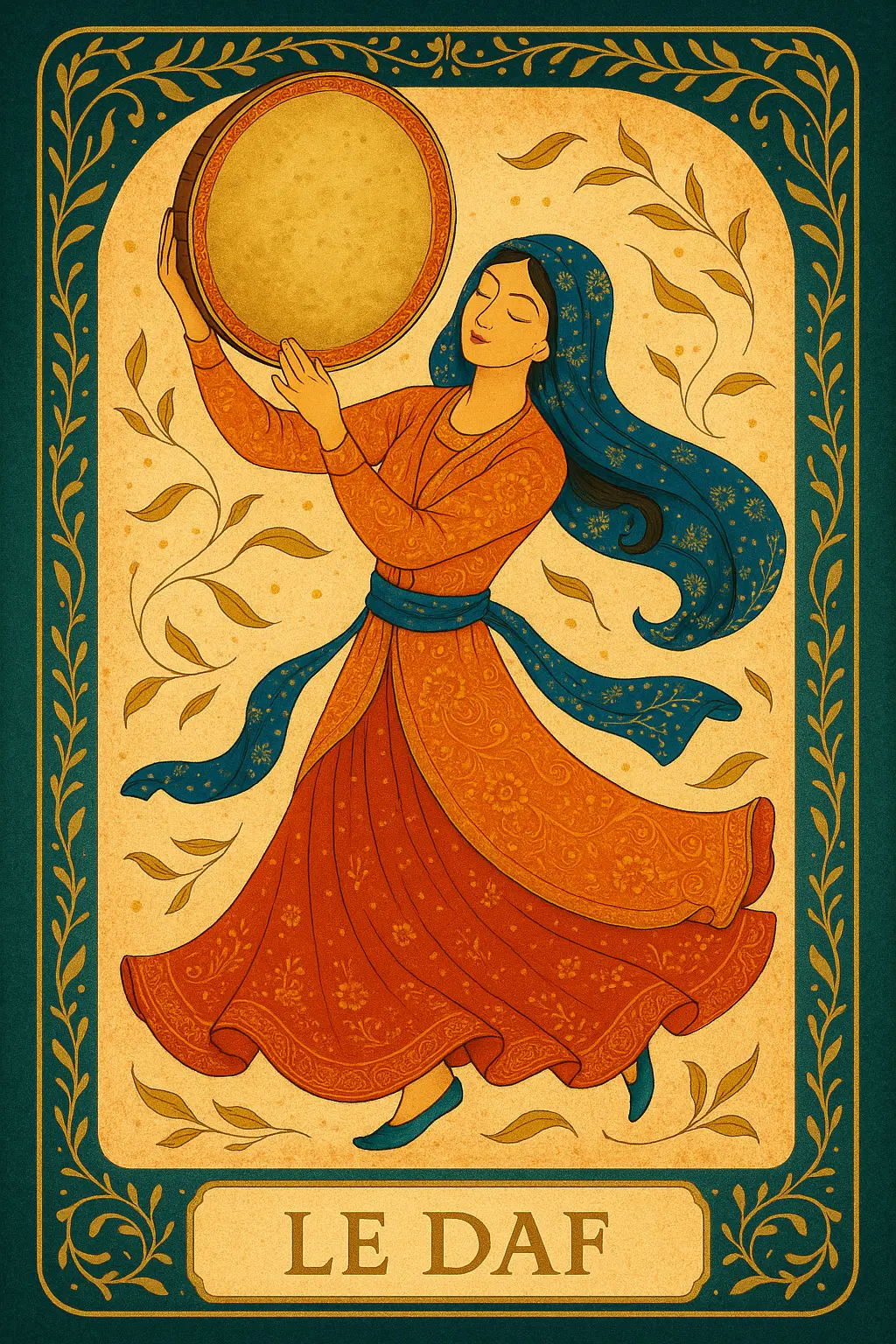
Born in Germany to an Iranian mother and a Kurdish father, Rana grew up in France, where she still lives today. Music was her first encounter with Sufi spirituality, as she played the daf, a sacred frame drum of Kurdish origin.Sufism then became the guiding thread of her life and her source of inspiration.This relationship with spirituality is not only a matter of origins: whether through practice or intellect, Rana dedicates her life entirely to this unique path.
Although she joined a Sufi order in her adolescence, it was only in 2017 that she began bringing it to the artistic stage. As the Sufis say: "A madman does not know he is mad, a wise man does not say he is wise, and a Sufi does not say he is a Sufi."? Sufism not only shapes Rana’s thinking — it nourishes her art as well as her teaching. On stage, during her performances, Rana’s dance is an unbroken ascending spiral, a movement that seems to truly lead to the divine. In her pedagogy, spirituality is ever-present, as Sufi dance cannot be understood outside of its context. People come from all over the world to experience this authenticity.
“In Sufi dance, it is a new encounter with oneself that takes place. The whirling movement is the emancipation of the soul. This spinning motion sweeps everything away; the only thing that remains is the breath.” — Rana Gorgani
There are times when you feel you need to get back to basics. The world is hectic, the days are full, the heart is sometimes scattered. Then the need arises for a faithful space, a living rendezvous, a place where we can find our bearings again.